

1st April 2025 Upcoming Changes

1st April 2025 Upcoming Changes

Is your system compliant with the latest changes effective 1st April?

Update on ESCT rates – new thresholds

Following on from the change in tax thresholds that came into effect on 31 July 2024, there is a further change to the tax thresholds for ESCT rates for employers’ Kiwisaver contributions as at 1st April. It is always recommended to review ESCT rates once a year after 1 April, but this is more important this year due to the tax threshold changes.

Action: Does your payroll system have a method for determining the ESCT rate for employees and what is the process?

Taxation of extra pay when employment ends

From 1 April new rules will be in place for extra pay on termination. The annualised amount will now be based on the PAYE income for the last two paid pay periods prior to the termination pay. If an employee is weekly paid, then the annualised amount will be calculated on the last two paid weeks times by 26 to get the annual income. Fortnightly paid will be based on the last two fortnights pay periods times by 13 and monthly paid will be based on the last two monthly pays times by 6 to get the annual income. The last two pay periods are the periods on which the employee received regular payments and excludes out of cycle payments made in between. The calculation also excludes any extra pay made in the regular pay period.

Action: Has the software provider updated the system to accommodate this new taxation rule?

1 April Min wage change

On 1 April 2025, the minimum wage will increase from $23.15 to $23.50, an increase of 35c. While this year’s increase is less than in previous years, it’s important to check employees’ rates and increase where the minimum wage is applicable. Be careful of the calculation of piece work where the average rate may fall below $23.50.

Action: Review and update any pay rates for employees on minimum wage. As this is legislated, there is no requirement to notify the employee although it is best practice.

ACC earner levy

Apart from a period from 1 April 2020 to 31 March 2022, ACC levies increase each year. ACC levies are included in the employees’ tax take each pay run and is not easily identified as the tax take is one amount encompassing both the PAYE and Earner’s Levy. This year the ACC levy is increasing from $1.60 per $100to $1.67 per $100. While the increase is small, there are some employees who notice the increase in tax and thus the reduction in net pay and may query it so it pays to have this in mind when processing the first pay run paid after 1 April.

Action: Review any release notes from software provider and spot check a few employees in the first pay run paid in April to ensure this has been updated.
Is your system compliant with the latest changes effective 1st April?

Update on ESCT rates – new thresholds

Following on from the change in tax thresholds that came into effect on 31 July 2024, there is a further change to the tax thresholds for ESCT rates for employers’ Kiwisaver contributions as at 1st April. It is always recommended to review ESCT rates once a year after 1 April, but this is more important this year due to the tax threshold changes.

Action: Does your payroll system have a method for determining the ESCT rate for employees and what is the process?

Taxation of extra pay when employment ends

From 1 April new rules will be in place for extra pay on termination. The annualised amount will now be based on the PAYE income for the last two paid pay periods prior to the termination pay. If an employee is weekly paid, then the annualised amount will be calculated on the last two paid weeks times by 26 to get the annual income. Fortnightly paid will be based on the last two fortnights pay periods times by 13 and monthly paid will be based on the last two monthly pays times by 6 to get the annual income. The last two pay periods are the periods on which the employee received regular payments and excludes out of cycle payments made in between. The calculation also excludes any extra pay made in the regular pay period.

Action: Has the software provider updated the system to accommodate this new taxation rule?

1 April Min wage change

On 1 April 2025, the minimum wage will increase from $23.15 to $23.50, an increase of 35c. While this year’s increase is less than in previous years, it’s important to check employees’ rates and increase where the minimum wage is applicable. Be careful of the calculation of piece work where the average rate may fall below $23.50.

Action: Review and update any pay rates for employees on minimum wage. As this is legislated, there is no requirement to notify the employee although it is best practice.

ACC earner levy

Apart from a period from 1 April 2020 to 31 March 2022, ACC levies increase each year. ACC levies are included in the employees’ tax take each pay run and is not easily identified as the tax take is one amount encompassing both the PAYE and Earner’s Levy. This year the ACC levy is increasing from $1.60 per $100to $1.67 per $100. While the increase is small, there are some employees who notice the increase in tax and thus the reduction in net pay and may query it so it pays to have this in mind when processing the first pay run paid after 1 April.

Action: Review any release notes from software provider and spot check a few employees in the first pay run paid in April to ensure this has been updated.

Winning the 2Degrees Business Award (South and East Auckland)

Winning the 2Degrees Business Award (South and East Auckland)

Winning the 2Degrees Business Award (South and East Auckland)

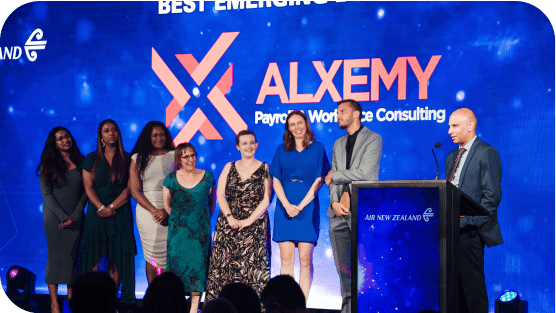
The New Year often invites us to look forward, but it also provides a moment to reflect on past milestones. For Alxemy, one of the highlights of 2024 was being recognised as the Best Emerging Business at the 2Degrees Business Awards (South and East Auckland), held on 4th December at the Cordis Hotel.

An Unforgettable Night

None of us had attended an awards ceremony before, so we didn’t quite know what to expect. As the first category of the evening, Best Emerging Business, was announced, our team sat nervously, uncertain of what was ahead. Then, when Alxemy was declared the winner, it felt like a scene from the Academy Awards! Cameras swarmed our table as we sat in astonishment, and it took us a moment to collect ourselves and head to the stage.

The journey to that moment wasn’t easy. Hilde Marais, our HR Manager, was the driving force behind our decision to enter. It took significant effort to gather and submit our entry, and being named a finalist was a surprise in itself. The Gala Dinner was a bright moment in what had been a challenging year, and the night highlighted the resilience and tenacity of businesses in our region.

Celebrating Resilience

With over 41 finalists across various categories, the event was a celebration of perseverance in business. As the organisers noted, “The winners and finalists were not just exceptional in their respective industries, but they were also shining examples of what it takes to succeed in the highly competitive business landscape.”

Looking Ahead

With this incredible win behind us, the team at Alxemy is now preparing for the Auckland-wide Best of the Best Business Awards on April 11, 2025, where the top businesses from all regional categories will compete.

Stephan Blumenberg, Founding  Director of Alxemy, reflected on the journey: “Winning the 2Degrees Best Emerging Business Award is a testament to the hard work, creativity, and dedication of our team. It’s a proud moment for Alxemy and motivates us to aim even higher in 2025 as we continue to support our clients and grow our impact.”

Stay tuned—2025 is shaping up to be an exciting year for Alxemy!

10 Problems that Dayforce Solves

10 Problems that Dayforce Solves

Dayforce

HR and payroll can get complicated fast.

Missed updates, manual calculations, and compliance headaches can make payroll a monthly stress test. For growing New Zealand businesses, it’s even tougher, complex rosters, multiple roles, and evolving Holidays Act requirements mean small errors can have big impacts.

Dayforce solves these everyday challenges by bringing HR, payroll, and compliance together in one platform. From accurate pay runs to streamlined onboarding, here are ten common problems that Dayforce solves for NZ businesses and why it’s becoming the go-to solution for teams that want efficiency, accuracy, and peace of mind.

Ready to simplify your HR and payroll?

Unlock the full potential of your organisation. Contact us now to get started with Dayforce!

Contact Us

 1. Payroll is always the last to know

In many organisations, payroll operates at the end of a long chain, dependent on managers to approve leave, HR to update details, and employees to submit timesheets. This often results in rushed deadlines, missed information, and frustrated teams.

Dayforce payroll changes that. Its real-time data updates mean HR, managers, and payroll are always working from the same information. Whether an employee changes hours, updates tax details, or takes leave, the system automatically syncs across all modules.

Everyone stays in the loop, and every payday runs smoothly.

2. Managing Global and Remote Teams

Workplaces are no longer confined to one office or even one country. Managing pay and compliance across time zones can become a logistical nightmare especially for NZ businesses employing staff in Australia or operating across regions.

Dayforce NZ simplifies global and hybrid workforce management. With unified data and cloud access, teams can work from anywhere while maintaining payroll accuracy and local compliance.

It’s ideal for hybrid and international workplaces, ensuring all employees, wherever they are, get paid correctly, on time, and in line with local laws.

3. Onboarding Without the Confusion

Manual onboarding often involves endless emails, paper forms, and inconsistent data entry. That means wasted time, missed documents, and compliance risks.

With Dayforce onboarding, HR can deliver a seamless digital experience. New hires complete all documents online before their first day – tax, banking, contracts, and personal details flow directly into payroll and HR records.

Managers gain visibility of where each person is in the onboarding process, while employees start with confidence knowing everything’s ready from day one.

4. Managing Multiple Roles and Pay Rates

Many NZ businesses, especially in retail, healthcare, and hospitality, employ people in multiple positions or at varying pay rates. Tracking these manually can lead to errors and compliance issues.

Dayforce automates complex pay structures, assigning the correct rate based on the employee’s role, shift, or location. Whether someone works as a store supervisor one day and a casual staff member the next, their pay is always calculated accurately.

That means fewer manual overrides, faster approvals, and full transparency for managers and payroll teams.

5. The Payroll Crunch

Every payroll team knows the pressure of payday week chasing approvals, double-checking calculations, and hoping no one spots an error after payments go out.

With continuous payroll, you don’t have to wait until the end of the period to process and review pay. Dayforce lets you calculate, audit, and preview payroll data at any time, so by the time payday arrives, everything is already validated.

Dayforce offers continuous payroll, process and review pay anytime, not just after the period ends, helping NZ businesses achieve accuracy, flexibility, and fewer last-minute fixes.

6. Communication Gaps

When HR, payroll, and operations use different systems, communication breaks down. Employees don’t know who to ask about missing hours, managers can’t see leave balances, and payroll ends up fielding calls all day.

Dayforce brings everyone together in one connected platform. Employees can check payslips, request leave, and update personal details through the self-service app. Managers approve changes instantly, and payroll sees the updates in real time.

It’s particularly powerful for retail, construction, and shift-based teams, where visibility and quick communication make all the difference.

7. Rigid Systems That Don’t Fit Your Business

Legacy payroll or HR systems often force businesses to adapt their processes to fit the software, not the other way around. That rigidity can slow down innovation and frustrate teams.

Dayforce is built for flexibility. Whether you’re a 50-person operation or a multi-site enterprise, its modular design lets you configure workflows, reports, and compliance rules around how your business actually operates.

As your organisation evolves, so does your system without the need for multiple new platforms or expensive customisation.

8. Too Many Platforms, Too Many Errors

When payroll, time tracking, and HR systems don’t talk to each other, errors multiply. Data gets re-entered manually, integrations break, and your team wastes time fixing avoidable mistakes.

Dayforce unifies HR, payroll, and workforce management in a single system. That means one source of truth for all employee data – less duplication, fewer errors, and more confidence in every report.

For businesses juggling multiple tools, Dayforce eliminates the noise and brings everything under one secure, scalable roof.

9. No Access When You Need It

Whether it’s a manager approving shifts after hours or an employee needing their payslip on the go, traditional systems often limit access to the office network.

Dayforce is cloud-based and mobile-friendly. Employees and managers can securely log in from any device, anytime, anywhere, without compromising security.

The result: empowered employees and faster manager response times, improving both transparency and trust.

10. Staying Compliant with New Zealand’s Evolving Leave and Payroll Laws

Payroll rules in New Zealand don’t stand still. New legislation, evolving leave entitlements, and frequent updates to pay calculations mean compliance is a moving target for most organisations.

Dayforce payroll takes the complexity out of staying compliant. Its built-in compliance framework automatically applies the latest rules and calculations, so your team doesn’t need to chase manual updates or risk costly errors.

Real-time data validation and configurable pay policies help ensure every payment is accurate, no matter how the regulations evolve.

With Dayforce, your business can stay confident, consistent, and ready for whatever changes come next.

Frequently Asked Questions


What are the main problems that Dayforce solves?
It tackles payroll delays, compliance risks, poor onboarding, and disconnected HR systems, all in one place.

Is Dayforce built for NZ businesses?
Yes. It’s fully compliant with NZ’s Holidays Act and supports local leave rules and calculations.

Can Dayforce scale with our team?
Absolutely. It’s designed for small teams to global enterprises with multi-location setups.

Wrapping Up: Solving HR and Payroll Problems the Smart Way

Managing people and payroll shouldn’t be an ongoing challenge. Dayforce empowers NZ businesses to streamline HR, simplify compliance, and build a more connected workforce.

Whether you’re growing fast or simply ready to modernise how you manage people and pay, Alxemy helps you implement Dayforce the right way, tailored to your organisation’s needs.

Simplify your HR and payroll today – Book your Dayforce consultation

.

10 Essential Steps for a Smooth Payroll Coverage Over the Holiday Season

10 Essential Steps for a Smooth Payroll Coverage Over the Holiday Season

Payroll

Payroll processing can’t wait for managers on extended leave to return for approvals. Before your management team heads off on their break, confirm that all necessary payroll approvals are completed or that alternate arrangements are in place.

This avoids bottlenecks and last-minute delays that could impact the timely distribution of payroll, particularly if approvals are needed from multiple departments. As we approach the holiday season, it’s essential for businesses to ensure payroll processes continue smoothly. Whether your business closes or operates through the holiday period, payroll must remain seamless.

Employees still need, and expect, to be paid on time. However, managing payroll over this period can bring specific challenges. Here are ten key considerations for ensuring a smooth payroll operation during the holidays:

1. Confirm Your Closedown Period

If your business has a closedown period, notifying employees in advance is essential. Legally, employees must be informed at least 14 days before a shutdown, but giving earlier notice helps them plan and manage their time off better.

Informing your team well ahead ensures they’re fully prepared and reduces last-minute disruptions to your payroll planning. It also allows employees to clarify any questions about how leave will be handled during the closedown period.

2. Clarify Annual Leave Requirements

If employees are required to take annual leave during the closedown, communicate this clearly, including what happens if they don’t have enough leave available.

Remember, employees are still entitled to paid Public Holidays that fall within their annual leave (as per Section 40 of the Holidays Act 2003). Encouraging employees to plan their leave carefully now will help them avoid surprises and ensure they’re paid appropriately. Early conversations with employees about these details can help smooth any confusion and set clear expectations.

3. Plan for Pay Dates Over Public Holidays

If a Public Holiday lands on a normal pay date, you may need to adjust payroll processing to ensure funds reach employees on time. Although some banks process transactions on Public Holidays, it’s not always reliable.

Adjusting payroll to process earlier, if needed, ensures employees are paid on the expected date, avoiding complications with automatic payments or direct debits. This extra measure reassures employees, keeps trust intact, and prevents any potential holiday-season stress around late payments.

4. Communicate Any Changes to Pay Dates

If payroll dates need to shift due to holiday timing, communicate this to employees well in advance. Employees rely on their wages to arrive on specific dates, so it’s courteous – and practical – to inform them of any changes as soon as possible.

By being proactive with this communication, you’ll avoid a flood of enquiries from staff seeking clarity during an already busy period for your payroll team.

5. Ensure Payroll Approvals Are Handled Before the Holidays

Payroll processing can’t wait for managers on extended leave to return for approvals. Before your management team heads off on their break, confirm that all necessary payroll approvals are completed or that alternate arrangements are in place.

This avoids bottlenecks and last-minute delays that could impact the timely distribution of payroll, particularly if approvals are needed from multiple departments.

6. Check Bank File Approver Availability

Payroll depends on bank file approvers to release payments, so it’s crucial to confirm they’re available during the scheduled payroll period. If pay dates are altered, approvers need to know about these changes to be available on the new dates.

Ensuring they’re prepared and available to approve files on time prevents delays in payroll processing, so employees receive their wages as expected, even during the holidays.

7. Verify Employee Leave Entries Are Up to Date

If your business has a closedown period, check that leave requests have been entered and approved for all affected employees. If there’s no closedown, confirm that leave entries for those taking holiday leave are accurate and complete.

This prevents any last-minute requests that could lead to errors or missing information in payroll processing, keeping everything on schedule. For businesses with high demand during the holiday season, ensure blackout periods are clearly communicated to employees well in advance.

8. Coordinate Operational Coverage and Leave Schedules

During busy holiday periods, coordinating who’s available to work is critical. If multiple staff want the same time off, consider setting a policy – such as rotating holidays or giving preference to employees who didn’t take leave the previous year.

Clear policies about holiday leave expectations create a fair system for everyone and help ensure you have the staff needed to maintain operations. If you require coverage on key days, set these expectations early to avoid disappointment and ensure smooth operations.

9. Prepare for Increased Payroll Workload

Holiday payroll management often brings an increased workload due to Public Holidays, additional annual leave processing, and potential employee turnover. If the holiday season is also your offboarding period, you may face additional pressure calculating termination payments.

Be sure you have enough resources in place to manage this demand. If your payroll team is stretched, consider bringing in temporary support to manage the extra load, so your team doesn’t feel overwhelmed and processing remains smooth.

10. Plan for Payroll Administrator Leave

If your payroll administrator is taking leave, it’s vital to ensure backup support is ready to step in. Payroll is time-sensitive and can’t be delayed, even over the holiday period.

Ensuring adequate coverage for payroll during this period gives your payroll administrator the well-deserved break they need while keeping payroll operations steady. Consider cross-training additional team members if possible, so they’re prepared to manage any payroll-related issues that might arise.

Case Study: Alxemy’s Journey with Restaurant Brands New Zealand

Case Study: Alxemy’s Journey with Restaurant Brands New Zealand

Restaurant Brands

A Leader in Food Retail, Ready for Growth

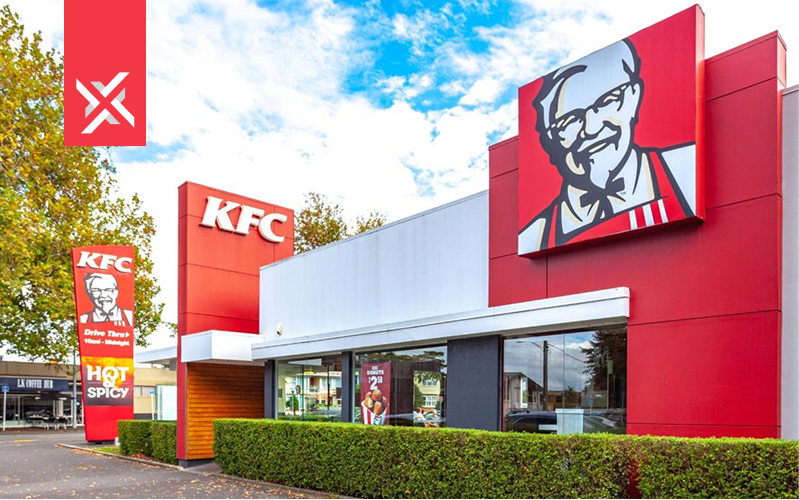
Restaurant Brands New Zealand is a leader in the multi-site quick service restaurant industry, operating iconic brands such as KFC, Pizza Hut, Taco Bell, and Carl’s Jr. 

With a strong local presence Restaurant Brands is focused on delivering exceptional customer experiences and staying ahead of operational challenges as they expand.

Scaling complexity and the Need for Expert Project Management

As their operations grew, Restaurant Brands faced  complex programs and projects. The first was the implementation of a new Customer Satisfaction Survey for KFC New Zealand, driven by KFC’s Global Head Office. This program required the management of multiple stakeholders, including vendors, consultants, and internal teams, to ensure seamless execution.

The second was a Technology Unification Project, spanning four different geographic regions. This project involved developing unified technology policies that complied with local regulations and aligned with Restaurant Brands’ operational goals. Both projects demanded precise project management and a partner capable of integrating with their internal teams.

Alxemy & Restaurant Brands At a Glance...

1. Two Ambitious Projects – Alxemy was brought in to manage a KFC Customer Satisfaction Survey and a multi-region Technology Unification Project for Restaurant Brands.

2. Precision for KFC – Both projects demanded technical expertise, stakeholder coordination, and regional compliance.

3. Embedded Expertise – Alxemy integrated seamlessly into the Restaurant Brands team, offering strategic project leadership and communication.

4. Leadership in Action – Cel Medes and Tariro Sibanda led each project respectively, ensuring smooth delivery across teams, vendors, and time zones.

5. Proven Results – Both projects were delivered on time and within budget, earning praise from both local and global stakeholders.

“We knew we needed a partner who could manage the complexity and become an extension of our own team,” said the Restaurant Brands Program Sponsor/CIO. “That’s where Alxemy came in.”

Why Alxemy Was the Perfect Fit

Restaurant Brands sought a project management partner with both technical expertise and the ability to seamlessly integrate with their team and culture. After careful consideration, they selected Alxemy. With a proven track record of handling complex, multi-region projects, and a reputation for flexibility and adaptability, Alxemy was the clear choice.

“KFC Global needed assurance that this project would be handled with care and precision, and it was clear that their leadership and experience were exactly what we needed,” shared the KFC Global Project Sponsor.

Restaurant Brands Program Sponsor/CIO Managing Complexity with Precision

Alxemy took the reins of both projects with their hallmark precision and tailored project management approach. For the Customer Satisfaction Survey, Cel Medes, Director of Operations and PMO at Alxemy, led the project from start to finish. Her focus was on coordinating the many moving parts – vendors, internal teams, and external consultants – ensuring smooth communication and alignment.

“Every project comes with its own set of challenges, but this one required a deep understanding of both technical systems and stakeholder management,” Cel explained. “We worked closely with the business leads to ensure that testing and system integration went smoothly, and that the project stayed on track.”

On the Technology Unification Project, Tariro Sibanda, Project Service Delivery Manager at Alxemy, stepped up to lead the initiative. This project required managing teams across four regions with different time zones, local regulations, and operational requirements.

“One of the biggest challenges was aligning technology policies that complied with varying local laws while ensuring they were operationally efficient for Restaurant Brands,” Tariro said.

Alxemy’s collaborative approach helped simplify the complexities, ensuring seamless execution and delivery within the agreed timelines and budgets.

 “Managing a geographically dispersed team added another layer of complexity, but with the right planning and communication, we were able to keep everyone on the same page.”

Seamless Execution and Tangible Outcomes

Both projects were delivered on time, within budget, and with remarkable success. The Customer Satisfaction Survey provided valuable insights to KFC New Zealand, shaping their customer engagement strategies moving forward.

The Technology Unification Project allowed Restaurant Brands to standardise their operations across multiple regions, making their infrastructure more scalable and compliant with local legislation.

“KFC Global praised Alxemy’s ability to integrate with our team and lead with both heart and strategy,” said the Global Project Sponsor. “Cel didn’t just manage the project – she became an integral part of our team.”

Tariro’s leadership in the Technology Unification Project was equally impactful. “Thanks to Tariro, we navigated the complexity of working across time zones and local regulations with ease,” said Restaurant Brand’s Program Sponsor/CIO..

Alxemy’s ability to adapt to our culture and their strategic oversight made all the difference in delivering this project successfully.”

Alxemy – A Partner in Growth and Success

Alxemy’s role in supporting Restaurant Brands through these complex initiatives has solidified their position as a trusted partner. With their ability to integrate seamlessly into existing teams, manage complexity with precision, and deliver impactful results, Alxemy is more than just a project management service – they are an essential component of Restaurant Brands’ continued success.

“We see Alxemy as more than just a partner; they’re part of our team, driving our business forward,” said Restaurant Brand’s Program Sponsor/CIO. “Their commitment to our success is unmatched.”

Key Takeaways

    • Alxemy led both the KFC Customer Satisfaction Survey and the Technology Unification Project, bringing clarity and consistency across vastly different scopes.
    • With multiple regions, regulations, and time zones in play, Alxemy delivered structured, coordinated project execution under pressure.
    • Rather than acting as an outside agency, Alxemy became an extension of the Restaurant Brands team, adapting to their culture and workflows.
    • Cel Medes and Tariro Sibanda each brought focused leadership, ensuring smooth delivery, stakeholder alignment, and timely results.
    • The work resulted in scalable infrastructure, valuable customer insights, and stronger compliance processes across all operating regions.
    • This partnership reinforced Alxemy’s role as more than a project vendor but as a strategic enabler of long-term success.